booker
UI/UX Design
Booker
A design sprint focused on AI-powered search
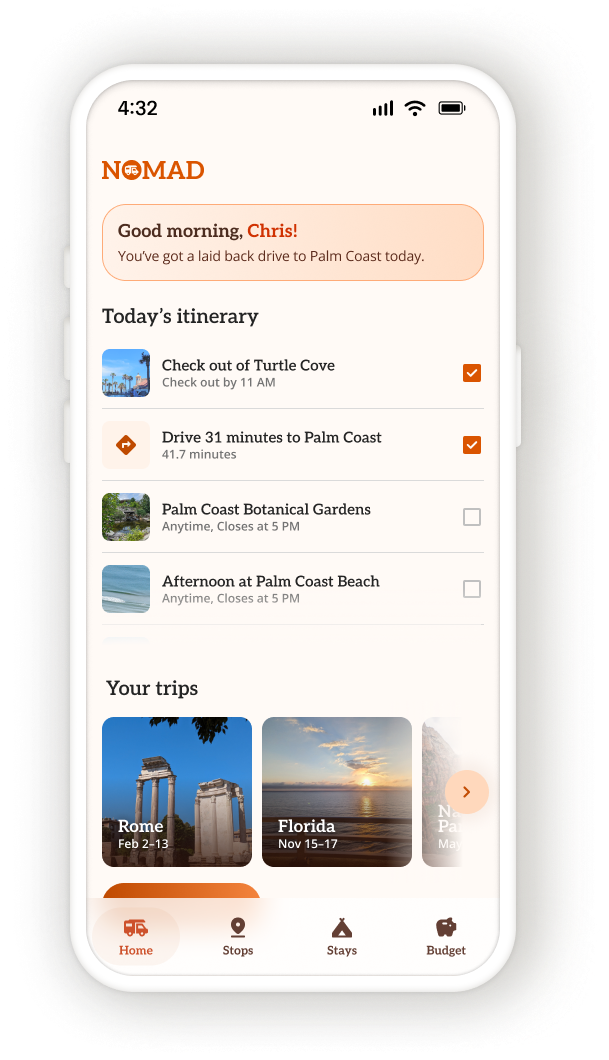
Nomad is an app where retirees can plan long-term travel via RV or camper.
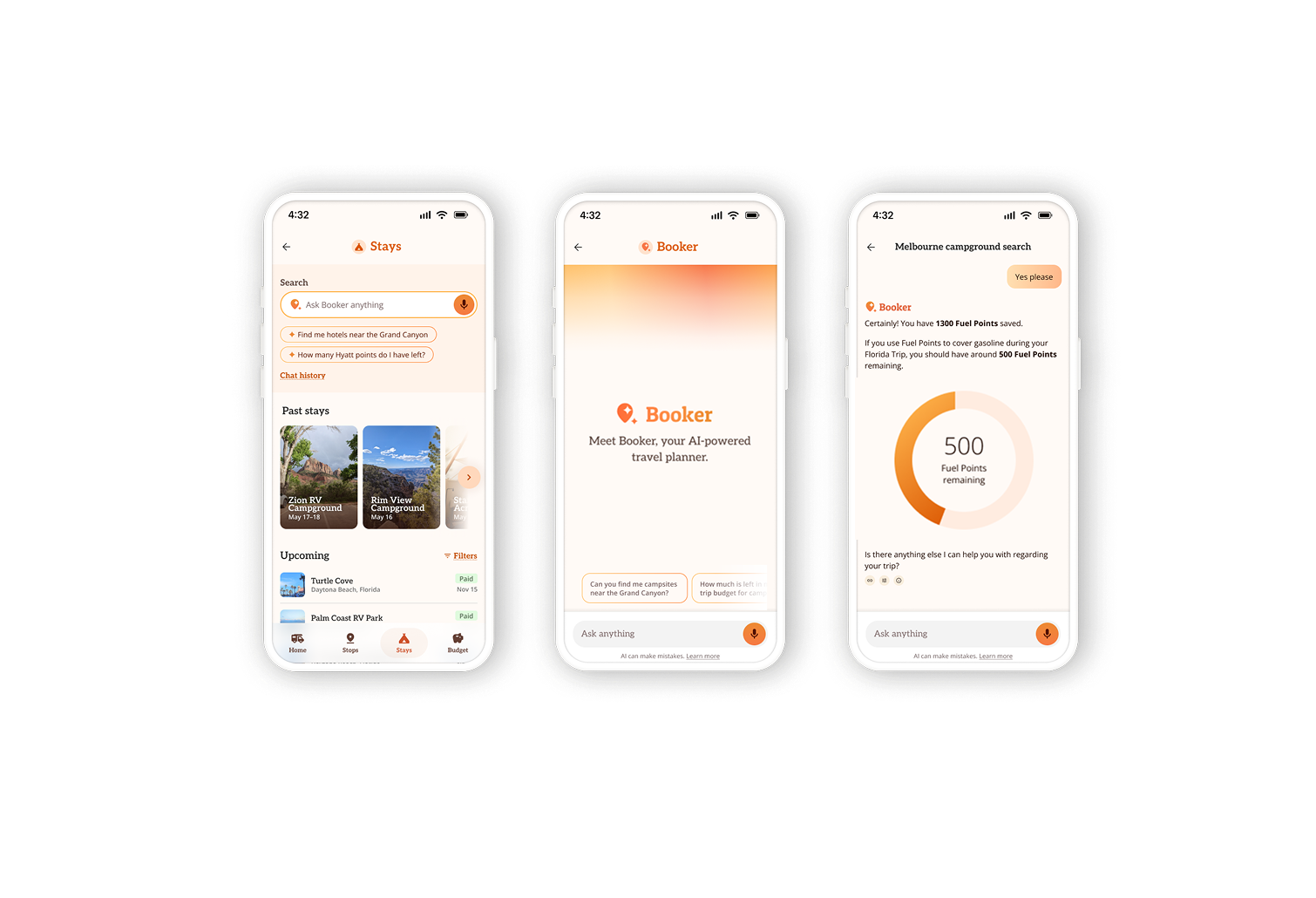
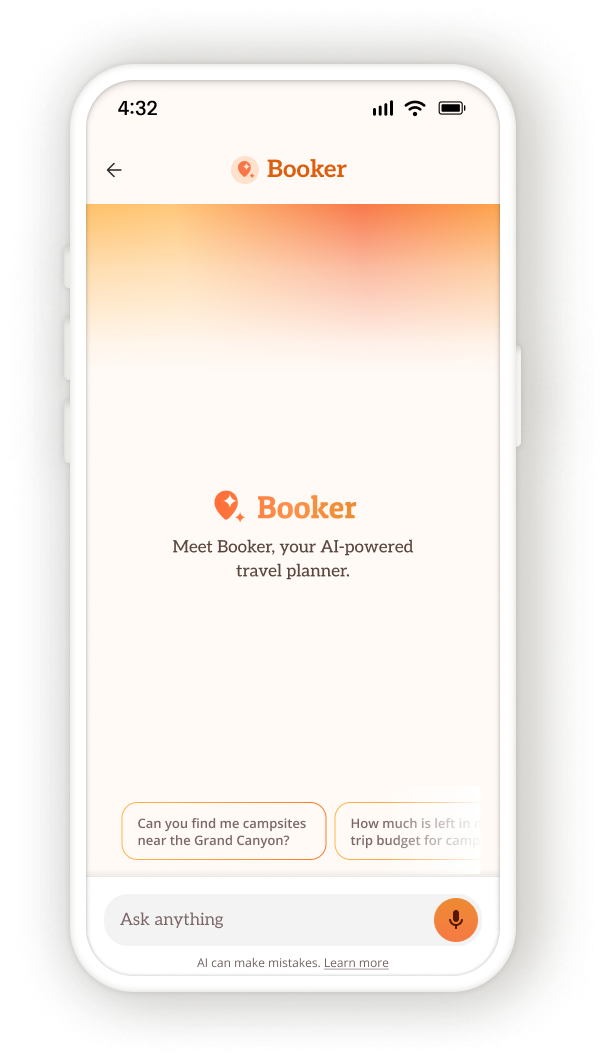
Our team was directed to conduct a three-week design sprint to design and test a prototype that envisions how conversational AI might help users of the app with complex planning tasks. We created a prototype for Booker, a conversational AI assistant suited to search, navigation, and summarization tasks.
Date
2025
My role
Experience strategy
Visual & motion design
Interaction design
Prototype creation
Approach
From prior research and the app’s usability survey we learned that many users find the planning process to be complex.
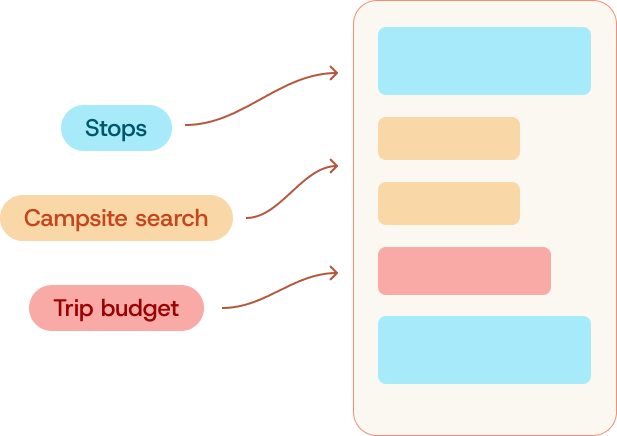
Based on this, we chose to focus on unifying the diverse information used when planning, while also allowing users to digest this information at a comfortable speed.
Design principles
Our team was instructed to explore an LLM-based experience in the design sprint. To guide our exploration, our team established 3 guiding principles:
1. Solve the right problem
Like any other technology, generative AI is only impactful when it is suited to the problem it's set up to solve. Building a conversational experience thoughtfully means targeting problem spaces where the stengths of LLMs are utilized and the weaknesses minimized.
Between our secondary research and user interviews, we learned that the best tasks for AI in our context were identifying navigation and search intent and combining disconnected information into a cohesive summary. It was less suited to tasks that required high accuracy (such as managing budgets) or complex workflows that users wouldn't want to conduct conversationally even with a human (like booking flights).
2. Know the audience
The app’s audience is primarily seniors who might be unfamiliar with or distrusting of LLM interfaces. Through interviews with seniors, we learned that comfort with conventional AI chat interfaces ranged from outright dislike to near-daily use. Regardless of sentiment, though, it was clear that AI features were only viewed positively if they helped with the user's need.
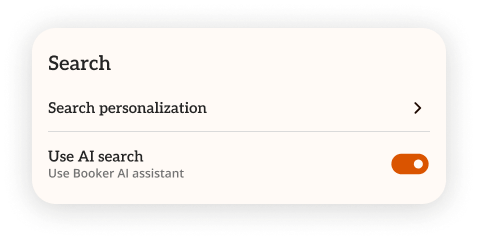
Given the range of experience and attitudes towards LLM experiences, we felt it was essential to be transparent where generative AI is used and to follow established UI/UX conventions.
3. Absolutely no gatekeeping
Our research participants were unanimous that generative AI experiences should not replace human assistance, such as in customer service contexts. Even in the more positively-viewed applications, like navigation, there was emphasis on ensuring AI features were not the only way for someone to access information.
No one should be unable to access their budget or reservations if they cannot use the AI tool (or choose not to).
Search (Stays)
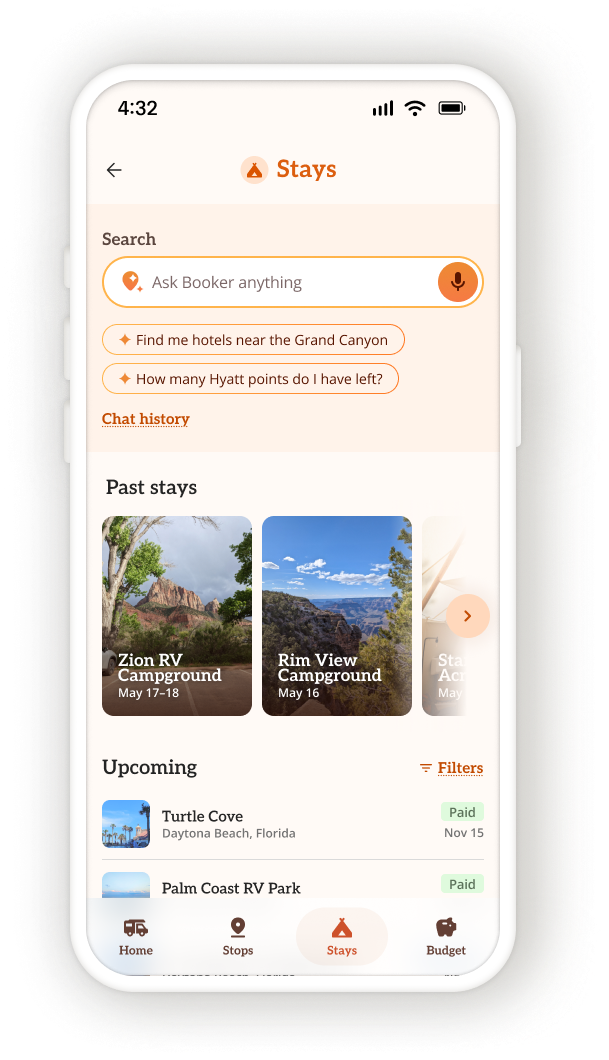
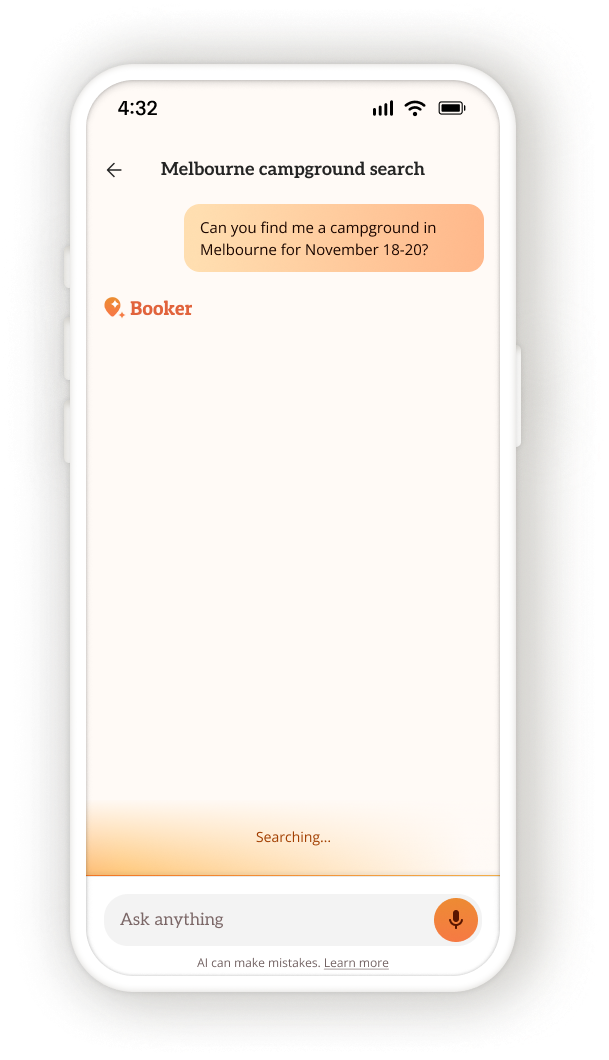
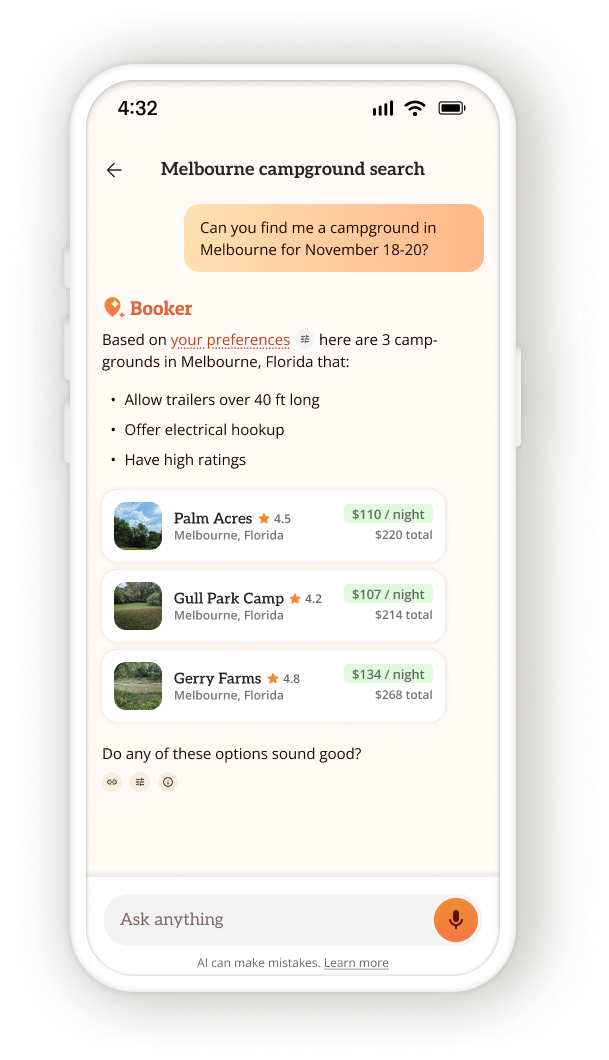
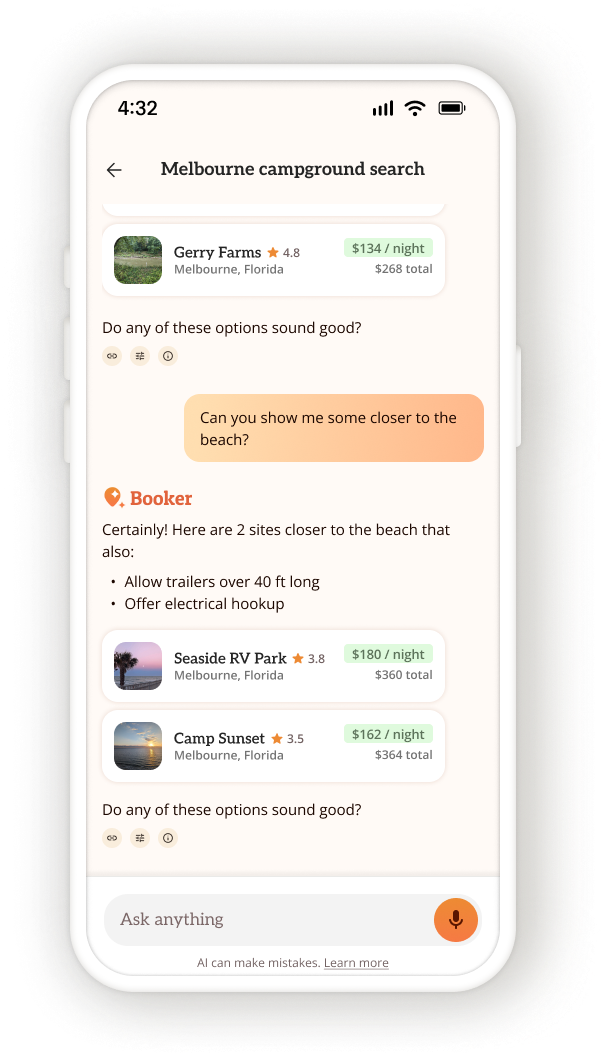
"Stays" are RV and camper campsites users can book as they long-term travel across the country. The conventional search experience maintains filters for the user's saved vehicles and shows results for a selected date range.
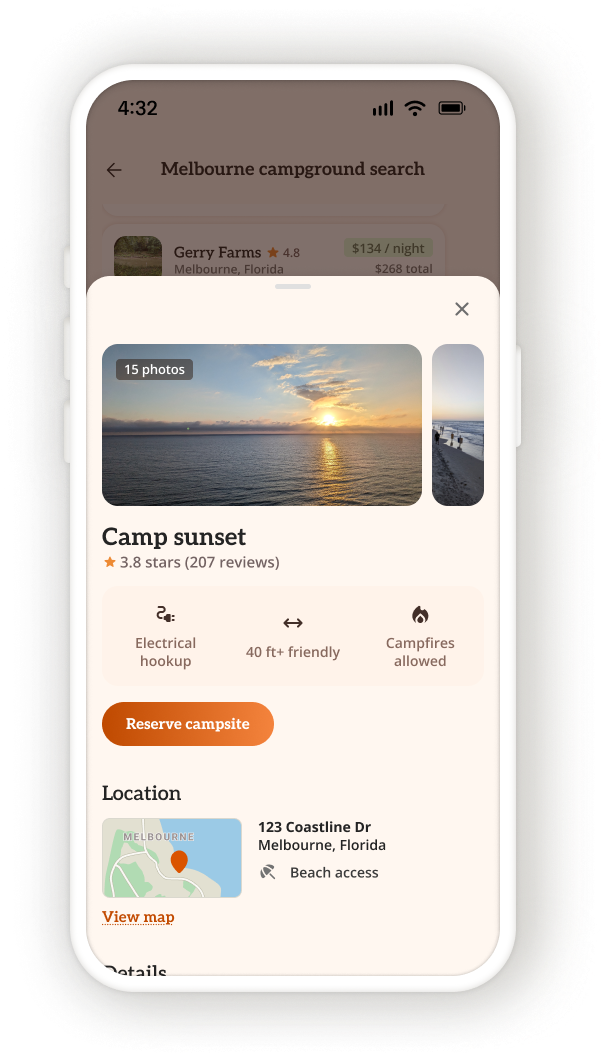
We explored this use case within "Booker." To avoid hallucinations around things like pricing, the design was for Booker to interpret the user's search intent and turn that into an API request. From there a list of result cards as a contained "widget" would be loaded inline to the experience to display the information returned.
Filtering is as simple as a follow up question, and to see more detail the user can click on any of the suggested stays to read more.
Putting the pieces together
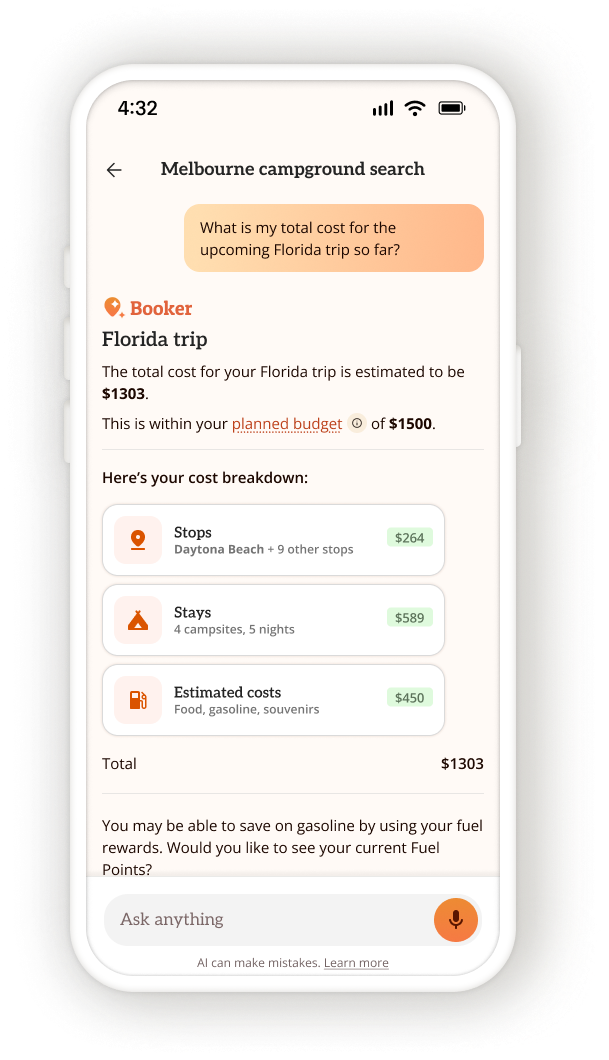
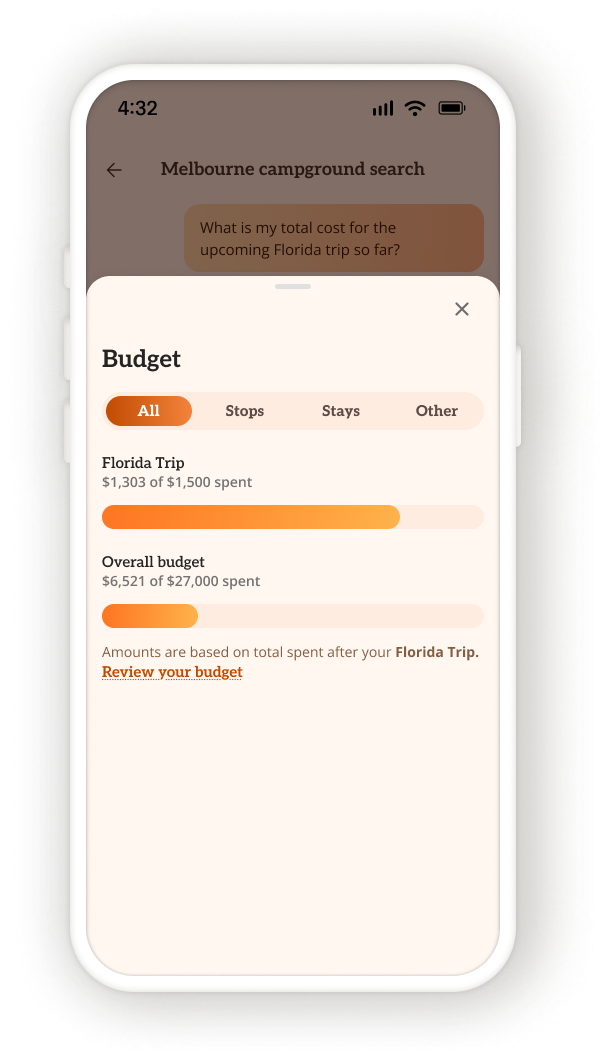
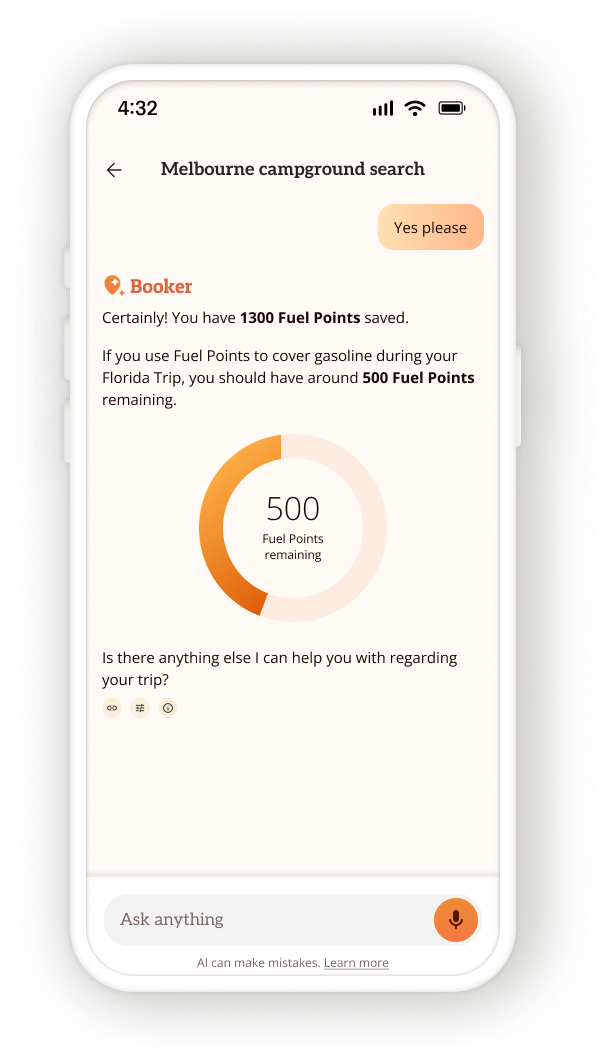
Our analytics showed that users would often bounce back and forth between Stays and Budget in the app, wanting to see how their choice of campsite impacted their trip budget.
For this sprint we wondered if a conversational experience might reduce the need for navigating between the pages and help narrow the information to the specific decision being made in the moment.
Like the search experience, we envisioned this using embedded widgets where accuracy was essential or visual elements helped explain things better.
Results & reflection
Overall, we were surprised by the openness to LLM features from our target audience, seniors. However, considering the familiarity of most users with texting and the appreciation for having their search terms "just work," it is now easy to see why.
"Oh! Thank you, Booker"
Participant using Booker to search for Stays
Although we did focus our efforts on use cases where AI's strengths would be utilized, it is possible that non-AI solutions to some of these applications would work just as well, or even better. Given more time and exploration, I would have liked to dig deeper into what the best solution for the users' needs truly is, and not just how best to use AI. The problem should always dictate the solution; not the other way around.